Cecil County Colored School Trip
This trip offered an opportunity to learn about the experiences of African American students who pursued education in a segregated one-room schoolhouse. Participants explored the preserved school building, hear stories of resilience and community, and gain insight into the vital role these schools played in shaping opportunities for Black children during the early 20th century.
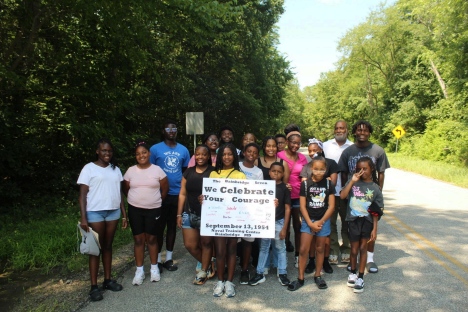
On July 24th, 2025, Wright’s AME youth group took a meaningful trip to visit several historic sites tied to the legacy of the Cecil County Colored Schools, including Cedar Hill and Mt. Zoar. We also visited the location of the former Bainbridge Elementary School, where seven African American students were denied enrollment in 1954. Our final stop was Elk Neck State Park, where we honored our ancestors and enslaved individuals who were brought to Maryland via the Chesapeake Bay.
At Cedar Hill School, we walked the grounds and were moved to see the building still standing in its original form. Many of us were surprised by its condition, considering its age and significance. We learned that the school was built by members of the Griffith AUMP Church, which remains active today. All grades were taught together in a single classroom, as Cedar Hill was a one-room schoolhouse. In 1952, it closed, and students were transferred to George Washington Carver School—now recognized as the historic Elkton Colored School.
Before leaving, each of us placed a hand on the building and said a prayer, thanking God that our people never stopped fighting for equality. I feel truly grateful and blessed to attend a diverse school today, and especially thankful for the much-improved conditions compared to what students endured in the past.
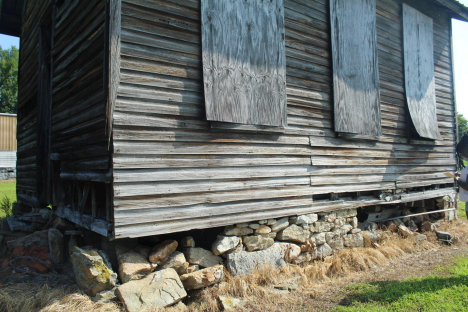
(Cedar Hill Colored School)
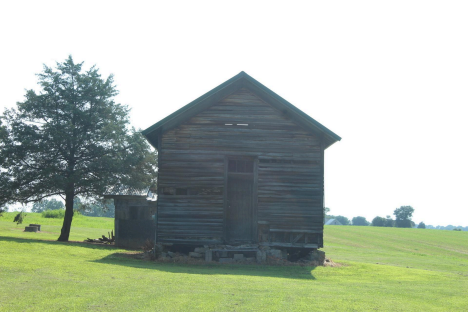
After visiting the Cedar Hill Colored School we went over to Congowingo to see the Mt Zoar Colored School. This school was built with money that was raised by John Berry. Jr, an African-American from Conowingo, and matched by the Cecil County School Board from the school tax that was paid by “the colored people” in 1871. The building that we saw that day was built in 1914 with money that allowed them to hire a contractor to complete the work.
Unfortunately due to the building being sold to the current owners we respected their wishes and did not touch but observed the makings and build of Mt Zoar. While observing from afar we were able to take note of the tin roof and design of a skilled contactor. Despite Mt Zoar being built by a contractor it was still just one room with all grades attending at one time leaving it very crowded and missing some of the basics to make it fully adequate enough to get a fulfilling education and an enriching environment for the children .
I felt like not being able to physically touch the Mt Zoar colored school gave it a sacred meaning and makes a person really appreciate the ones who powered through hardships and inequalities to pave a way for future generations to have access to better education and school environments for the African American communities.
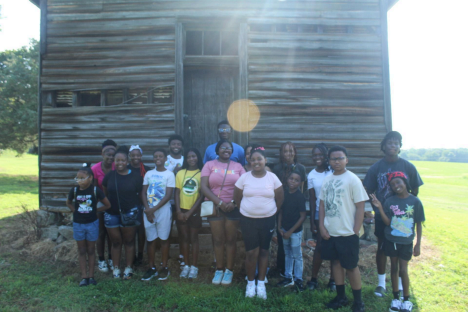
( Mt Zoar Colored School and the youth group)
On the way to the Naval Training Center at Bainbridge, the youth learned that they were visiting the school where seven African- American children were denied entry into the building housing Bainbridge Elementary School. Regardless of the site being closed, we were able to celebrate the courage of the seven young children who endured the vile rejection and became apart of a lawsuit that was filed on their behalf in 1955. Because of this,Cecil County was forced to move forward ever so slowly, to desegregate eventually in 1965. Upon arrival of the school, everyone was able to see the distance students would have to walk from the housing previously located in the Naval Base, to the Elementary School. The new and modernized school as well as the industrial development tells us the story of resilience and renovation, showing the results of the African American community.
Following a visit to the Bainbridge Naval Center, our journey led us to the Elk Neck State Park in North East, Maryland. Nestled between the Chesapeake Bay and the Elk River, this location holds not only natural beauty but also deep historical significance.
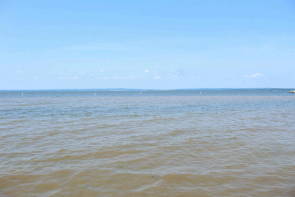
Our visit to Elk Neck was inspired by an earlier trip to the Smithsonian National Museum of African American History and Culture, where we explored the powerful exhibit “In Slavery’s
Wake: Making Black Freedom in the World.” This exhibition highlighted the history of the 127,000 enslaved Africans who were brought to the Chesapeake shores in 1775. Understanding the historical weight of this region, we chose this site intentionally—to honor the lives, labor, and resilience of those who endured unimaginable hardship and left behind a legacy of strength and perseverance.
To commemorate their lives, we held a meaningful ceremony by the water. Pastor Rev. Ricardo Burns began with a heartfelt prayer, setting a tone of reverence and reflection. Bro. Amare Motley followed by reading a quote titled “The Wake,” while Sis. Dreanna Watson elaborated on its symbolism—the power created by moving water—and reminded us why we had gathered at this sacred location.
Sis. Yemaya Law spoke on the cultural and spiritual significance of cowrie shells in African traditions. As part of the ceremony, each participant selected a “celebration card” featuring the name of an enslaved individual, their enslaver, a notable accomplishment, and a character trait we admired in them. After reading our cards aloud, we each picked up a cowrie shell to symbolize honor, remembrance, and gratitude for the lives and legacies of those we were uplifting.
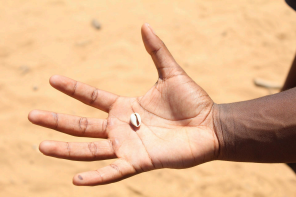
To conclude the ceremony, Bro. Jahzir Law offered a closing prayer, bringing our time of remembrance to a close with dignity and grace.
This gathering at Elk Neck State Park was more than a visit—it was a tribute. A moment to reflect on the past, to acknowledge the pain and perseverance of those who came before us, and to celebrate their unbreakable spirit in the very place their stories began.
By: Amare Motley, Dreanna Watson, Yemaya Law and Jahzir Law