Commissioner Interview: Katie Caljean
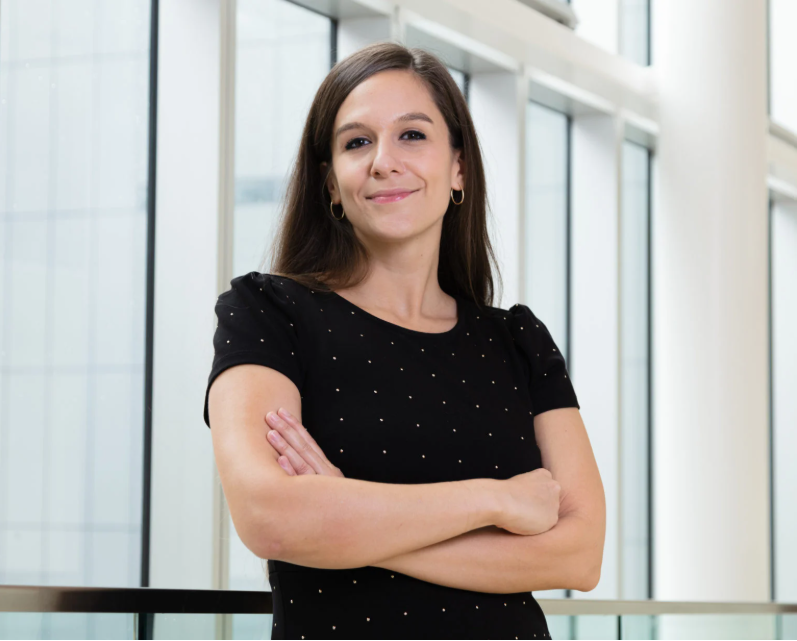
For this month’s newsletter, we had the opportunity to speak with Katie Caljean, President and CEO of the Maryland Center for History and Culture, as well as Chair of MD250 Commission’s History Working Group.
Caljean was born and raised in the small mining town of Dover, New Jersey, 30 miles outside of New YorkCity. From a young age, Caljean loved science and history, a distinguishing characteristic that many of her classmates and teachers had come to know her for. As a child, she often visited living history sites, such as Historic Speedwell, Jockey Hollow and George Washington’s Headquarters in Morristown, NJ. Caljean described these places as being “steeped in authenticity”, recalling learning about corsets and other facets of colonial life.
She later went on to study anthropology,Latin American archaeology, and arts administration and museology at Drew University in Madison, NJ, where she met her husband, a Marylander. For Caljean, the two fields were an intersection of science, history, and culture, encapsulating her primary interests. She enjoyed the hands-on practice of archaeological fieldwork, and has done such work in Arizona and Wyoming, as well as Ecuador and Peru. Caljean also participated in Drew’s New York City Semester on Contemporary Art and Culture, connecting with prominent artists through meetings in their studios and visits to museums across the city.
Caljean attended graduate school at Columbia University in a program that was offered jointly with the American Museum of Natural History, which allowed her firsthand access to museum professionals, such as curators and collection managers. This exposure opened Caljean up to a host of other career paths within the realm of cultural institutions. “There are so many other jobs [beyond a curator role] that make these institutions vibrant places where people can engage with the past, and really bring history to life.” Caljean sees history as more than just information to be consumed, but to be actively engaged with, and this belief shines through much of her work.
Caljean’s first museum role was as a museum educator at Morris Museum in northern NJ, where she taught a wide range of topics through hands-on experiences. In 2012, she moved to her husband’s home state of Maryland, and took a chance reaching out to the then-Maryland Historical Society, now Maryland Center for History and Culture, for employment. She had learned about the institution in graduate school, through a lesson on Fred Wilson and George Ciscle’s exhibition, Mining the Museum, which had taken place at the Historical Society in 1992. The exhibition is not only in textbooks, but taught on an international scale, challenging how exhibitions thought about museums and collections. She recalls thinking, “This is a place I want to go learn more about.” Caljean started as a museum educator, but quickly found herself working in the advancement office, brainstorming creative ways to engage donors and supporters. This was a position she had never considered when she thought of museum work, yet it taught her a lot about funding, and how donor stewardship is the lifeblood of publicly funded institutions. Caljean has since met Wilson and George Cisle. “It’s like meeting your heroes, it’s always an amazing feeling,” she shared.
As her work with MCHC continued, Caljean became the Vice President of Education & Strategic Engagement, and an integral part of the institutional rebranding in 2020. The goal was to position the space as a “dynamic center that is open for everyone.” Use of the word “Center” was a very intentional decision made to signal to the community that the collections, campus, and resources are tools for everyone in the state to use. Caljean referenced the upcoming opening of the new education hub on campus, in conjunction with a new exhibition, WayFinders: Making Sense of Our World, geared toward families, teachers and upper elementary students. Caljean and the MCHC team understood that this demographic is seeking reliable history resources, and wanted to fill the gap.“This is an audience that is in need of history resources that are fair, balanced, and that challenge students and adults to be critical thinkers.”
Caljean shared with us that her mother is also a major influence in her success. Through her mother, she learned fundraising skills, and overall resourcefulness. Her mother was often leading the charge in raising funds for students’ school needs in creative ways that allowed the kids to also be a part of the solution. Caljean envisions the MCHC to do just that; invite people to be a part of the changes they would like to see. “It’s been a part of my whole life,” she told us, “listening to the community and finding ways to get people what they need.” In 2022, Caljean was asked by the Board of Trustees to take on the role of President and CEO. She recalled how her paternal grandmother, who was a Calvert born in Port Deposit, MD, would tell her stories about Lord Baltimore, the Calverts, and the Ark & the Dove. “In a lot of ways being here is like coming home – though I didn’t seek this out, this is exactly where I should have ended up”
Above all else, Caljean wants Marylanders to know that MCHC and its library are open and available for the public to use for whatever queries they may have. The Maryland Historical Society was founded in 1844, and is the oldest continually operating cultural institution in the state of Maryland. Caljean describes MCHC’s collection as rich and deep. “I like to say we ask our collections questions and new stories emerge,” she told us. Again, for Caljean, history is something that is done; the resources at MCHC are there for visitors to engage with them, rather than simply consume the information they provide. “Our space is dynamic, and open for dialogue with each other and objects from all eras of Maryland history,” she adds, “we want people to look to primary sources and evidence and draw their own conclusions.” Additionally, Katie also wants visitors to be aware of the opportunities available through MCHC. It’s a space for programs and educational resources onsite, offsite, and virtually, serving students, teachers, and university professors across the state and throughout the nation.“We’re a place where a lot happens,” she tells us.
She also shared that MCHC offers a number of scholarship opportunities for school programs, and has underwritten programs as a means of extending their reach to other parts of the state. “Although we’re in Baltimore and want to be a good neighbor here, we also strive to be wherever we can to be a good friend and collaborator.” The team is always looking for ways to offer resources and connections to strengthen other projects and initiatives. One way that MCHC accomplishes this goal is through the Thomas V. “Mike” Miller Jr. History Fund, which provides support for projects at museums, historical societies, libraries, and other repositories throughout the state of Maryland. The goal is to build the long-term resiliency and efficacy of Maryland’s historical collections stewards. The Miller History Fund is made possible by an annually recurring allocation from the state’s Preservation of Cultural Arts Fund. Caljean shared that in addition to awarding grants, staff will often consult on the projects of their grant recipients, with the goal of helping to amplify the stories being told.
When asked about her favorite piece or exhibition at MCHC, Caljean told us her favorite item is Mary Katherine Goddard’s broadside of the Declaration of Independence, which was printed in Baltimore in 1777, when Baltimore was the temporary home of the Continental Congress. While Dunlap’s copy was technically the first, Mary Katherine Goddard’s copy was the first to have all the signer’s names printed for public consumption. MCHC will have Mary Katherine Goddard’s copy on display this summer in a conservation-grade case designed specifically for their library treasure rotations.
For MD Two Fifty Commissioner Katie Caljean, America is about hope and promise for the future. She feels it is important to nurture the ideas of the next generation, just as her parents did for her. “My parents instilled in me that if you could dream it, you could build it, and I think that’s something we need to continue.” Through this encouragement, we can inspire the next generation to raise their voices and be active parts of decision-making processes.
When it comes to the 250th, Caljean truly hopes that people take part in this moment. There are so many amazing projects and events happening this year, and she doesn’t want people to miss out on the memory-making that will take place. Marylanders specifically should take advantage of this moment, as we are a state steeped in history. Caljean also hopes that history work and public history institutions that advance the importance of art and culture are sought after beyond the semiquincentennial year. With this being a historical year, there is naturally a lot of energy around our cultural and historical institutions. For people like Caljean who are consistently engaging with stories of the past, the hope is for people to “still care about the process of doing history” for years to come.
Ultimately, Commissioner Katie Caljean’s journey, from a child captivated by colonial life in New Jersey, to the President and CEO of the Maryland Center for History and Culture, embodies a passionate commitment to making history active, engaging, and accessible. Her work focuses on transforming the MCHC into a dynamic resource for all Marylanders – where primary sources spark critical thought, where community dialogue is at the forefront, and where the next generation is inspired to build their dreams. Caljean’s vision ensures that Maryland’s history is not just preserved, but continually brought to life, inviting everyone to be a part of the process.